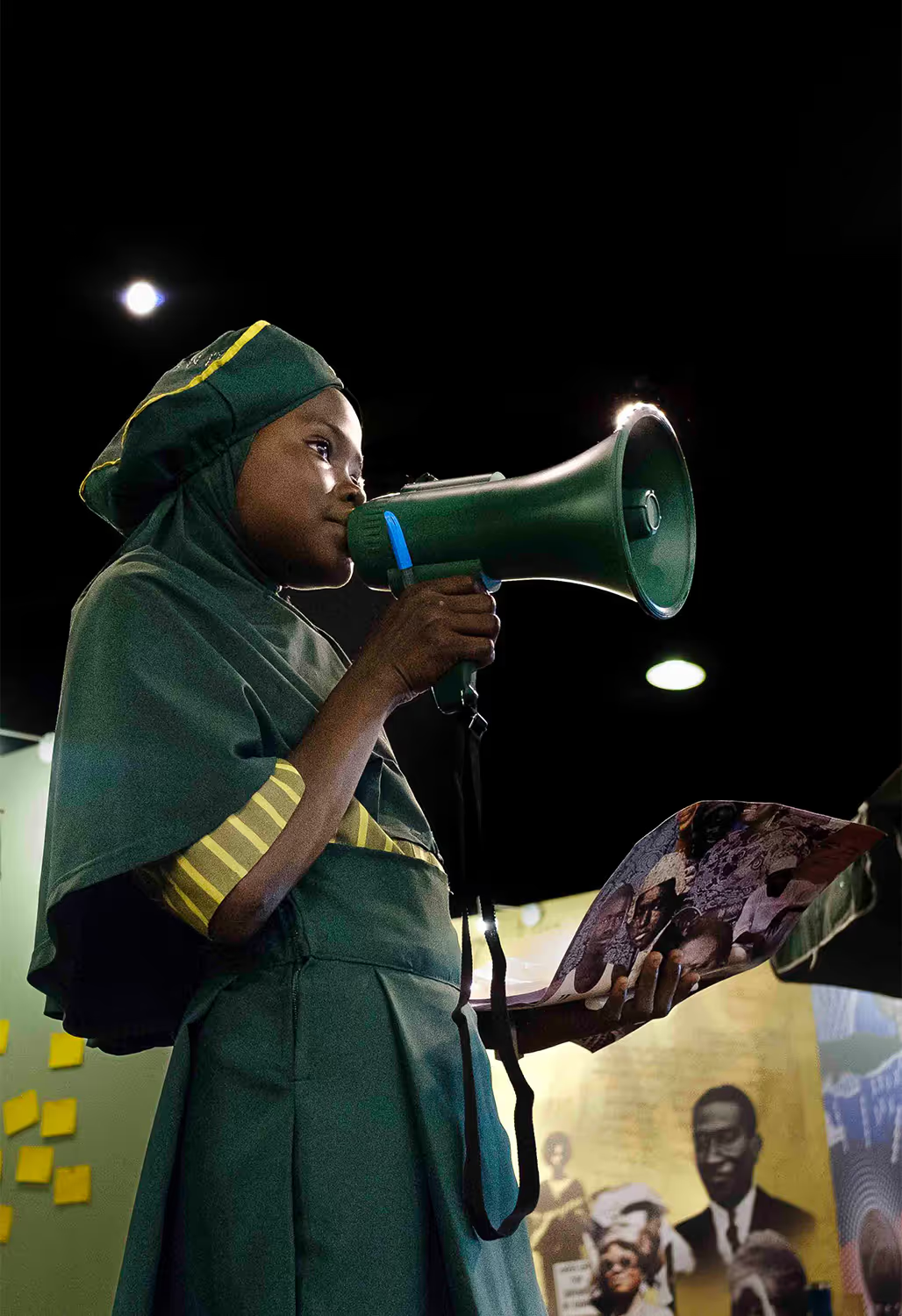
image credit: Peter Chukwu
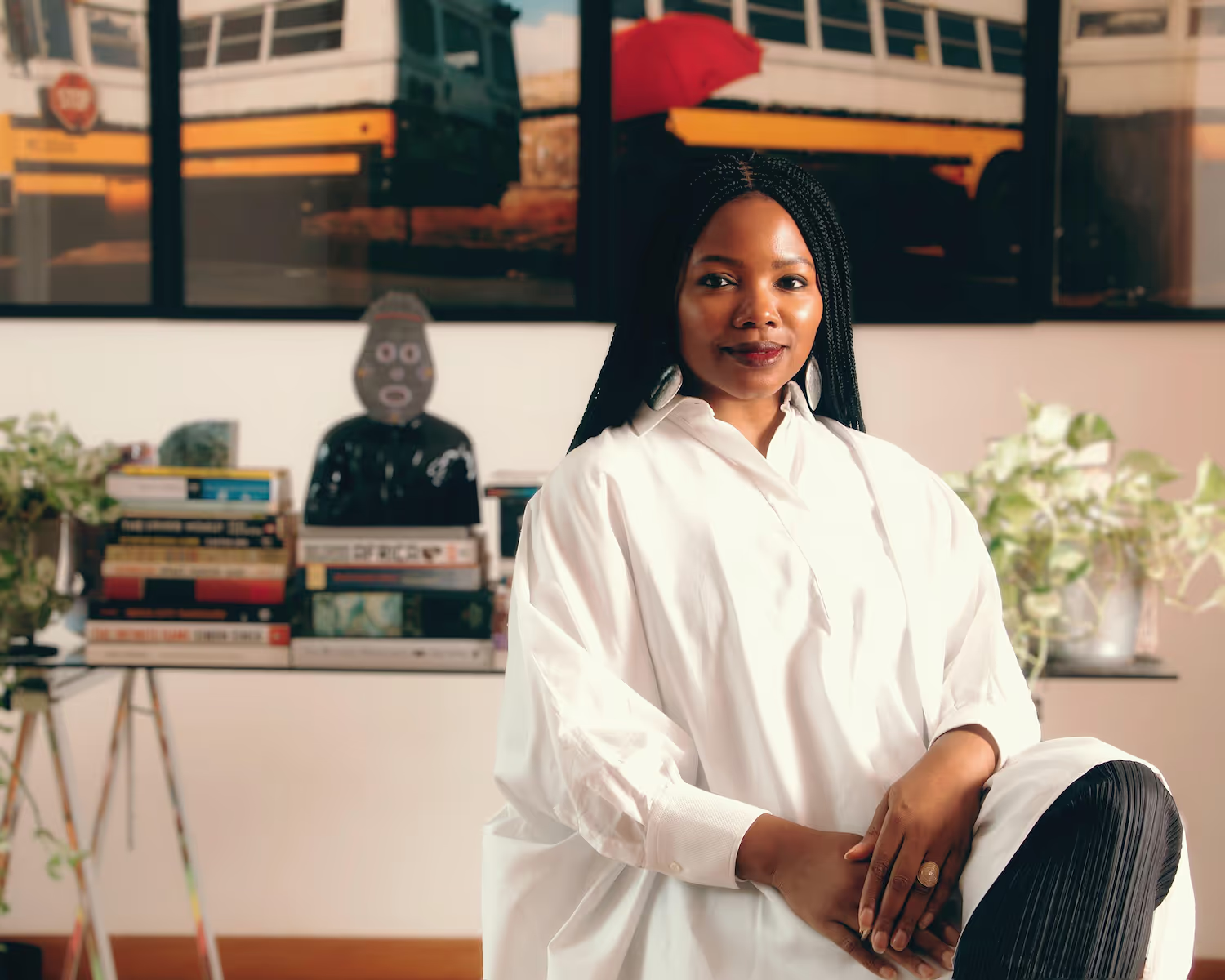
Interview by Lola Ogunnaike.
It’s August at the time of writing this, yet, you can feel the gears starting to kick in for what’s to come in November. To the seasoned habitué of the Lagos arts and culture sphere, the early days of November mean a few things. The usually warm tropical air gives way to the cooler, hazy climate of the harmattan season. With it, the city lights up in anticipation of ART X Lagos, the annual art fair that has, since its inception, placed itself thoughtfully in the heart of the ingenuity and passion nestled within the African creative scene. “I wanted to create and platform this entity for the city, country, and continent,” Tokini Peterside-Schwebig, the founder of ART X Lagos.
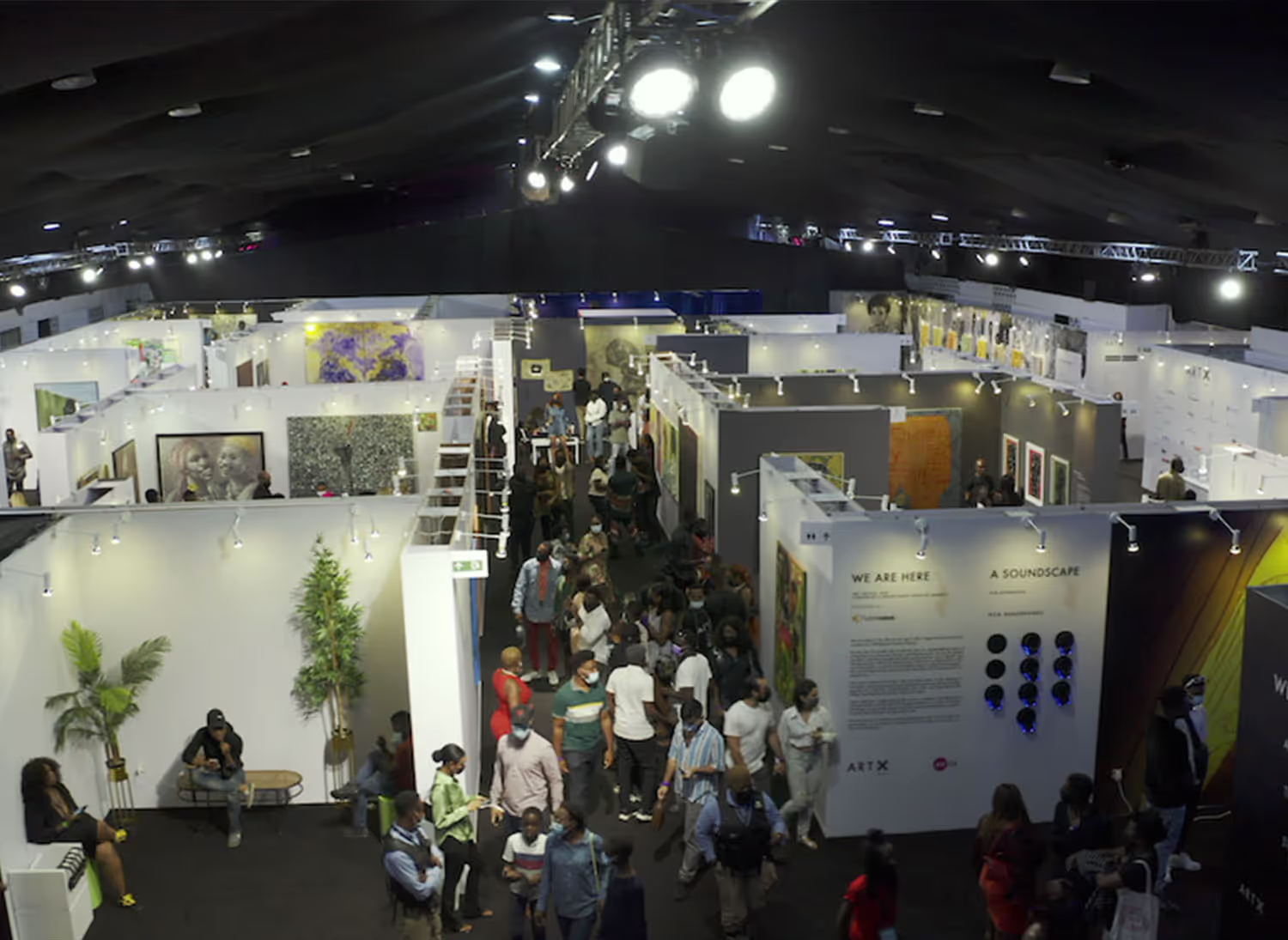
Over the years, ART X Lagos has been at the forefront of platforming African art authentically and earnestly through its fair as well as its programmes such as ART X Live!, ART X Cinema, ART X Talks, the coveted ART X Prize, and more. Within its walls at the Federal Palace Hotel (previously held at the Civic Centre), the works of creators both young and old, veterans and novices are welcomed by seas of eager audiences. Now in its 10th year, the fair has not only placed the city of Lagos as a formidable destination in the global art market but it continues to thrive as a movement, connecting hundreds of visionaries from across the world.
From her home, Tokini Peterside-Schwebig is joined in conversation by journalist, collector and friend, Lola Ogunnaike to tell the decade-long story of ART X Lagos. A story of intention, intuition, conviction, community, and an unshakable love for Lagos.
The conversation, which follows, has been lightly edited for clarity.
Lola Ogunnaike:
Where in the world do you feel most inspired at this point in your life?
Tokini Peterside-Schwebig:
I am most inspired in Lagos. It is the city that shaped me at different points in my life. It is where I was born, where I had my formative years, and it’s the city I was taken away from when I went overseas to study. When I moved back to Lagos 17 years ago, after my time in the UK, the city was on the cusp of a cultural explosion. I find Lagos deeply inspiring and also perplexing. Its contradictions are extreme, between the inequities as well as the potential and possibilities. There is also the human warmth and extraordinary talent of its people. It’s my love of Lagos that led to my creation of ART X Lagos.
LO:
I was only meant to be [in Lagos] for 10 days during the pandemic in 2020. Ten days turned into 5 and a half years. When you moved back, did you plan to stay?
TPS:
I was eager to return home. By then, I was starting to see the connections between what was emerging from the literary scene, the music, the fashion and other creative scenes. On the visual arts side, I was privileged to attend a number of exhibitions in those years, and could see that we were on the cusp of something transformative. So when I made the decision to come home, it was a very deliberate move to contribute what I could to this momentum that was gradually beginning to build.
LO:
What was it like to be in the middle of this creative renaissance that was emerging in Lagos at that time?
TPS:
It was exciting. Everyday there was something new to discover. This was the era where we transitioned from listening to American music to embracing predominantly Nigerian music - we began to demand it. In Lagos there were open mic nights, the emergence of innovative restaurants, and a growing pride expressed through fashion that reflected our Nigerian identity. A renewed, amplified sense of Nigerianness and Africanness was taking root across the city.
LO:
You always talk about the significance of Lagos as a city and how it’s essentially Africa at its most powerful. Did you see nuggets of that back then when you moved back? Talk to me about how those seeds have flourished.
TPS:
Lagos is a powerhouse, by virtue of the sheer force and determination of its people. Lagosians have always carried an innate confidence, a sense of power that we often take for granted. That self belief is a resource in itself, one that must be celebrated and harnessed for our collective good. As the cultural and commercial heartbeat of Nigeria, Lagos holds a unique place in shaping what is possible for the country, and in offering inspiration to the rest of Africa and the diaspora.
LO:
Let’s talk about the formation of ART X Lagos. I know you were earning an MBA at INSEAD in France when you formulated your business plan for ART X Lagos, and your inaugural fair was launched within a year and a half. What propelled you to create the fair?
TPS:
It actually came to life within 11 months of my return. At the time, music, fashion, and film were flourishing in Nigeria and beginning to gain global recognition, yet the visual arts scene, which I had come to know well over the years, in the course of my journey as a collector, remained largely the reserve of a small group of collectors. I started to conceive of the idea to transform the trajectories of our exceptional, talented artists, firstly by creating access for larger audiences within our society, especially the younger generation.
At the same time, conversations with artists, gallerists, and curators from across Africa revealed a shared desire for pan-African collaboration. They were eager to explore Lagos, and Nigeria, as a potential hub on the continent for the visual arts, and I saw that it could be that if framed right. I became convinced of the fact that we had a unique opportunity to create a platform from which African artists could engage the world, while also welcoming the world into our own reality, on home soil. ART X Lagos was born out of the conviction to create a defining moment for us, by us.
LO:
How did you sell your vision of ART X Lagos and how did you convince people to buy into it?
TPS:
From the beginning, I explained that the vision was bigger than ART X Lagos itself. My pitch was simple; If you believe that our identity as Nigerians and Africans deserves to be depicted at the highest levels through our art and our culture, then this is a platform you should stand behind. My goal was to create an iconic moment for us all that would resonate globally. It meant that people from all over the world would come into our city to encounter us, as Africans, in the part of the world where we are most powerful.
LO:
What was the initial reaction? Was that enough to convince both investors and people who wanted to work with you to come on board?
TPS:
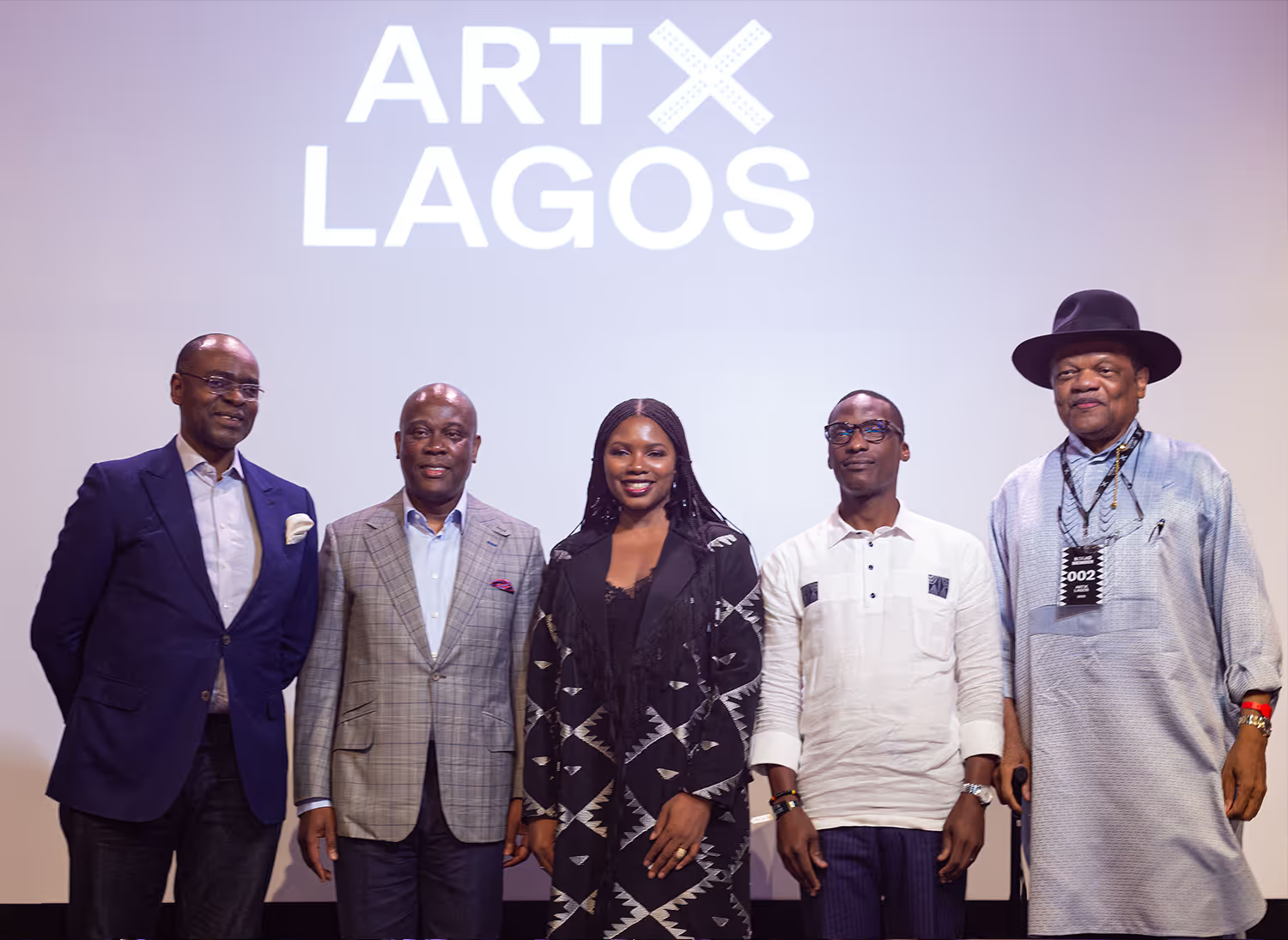
For some people it was an immediate yes. It instantly resonated with what they were hoping for. The late Herbert Wigwe who, through Access Bank, was our first sponsor to come onboard, was taken with the notion of what this could become and what it could achieve for the continent. I think about Bolaji Balogun, as well, who was ready for Chapel Hill Denham to support from day one because it spoke to their wishes for us as a people, and our culture. And then Kavita Chellaram whom I approached as a gallerist and who gave an instant yes. Of course, there were several collaborators and stakeholders who needed to be convinced, but the truth is, that as we spoke to people, they listened and we picked up tremendous momentum.
LO:
Take me back to the inaugural fair. Set the scene.
TPS:
The fair opened on the 4th of November 2016 with an invitation-only VIP preview and the atmosphere was electric. Lagos traffic came to a standstill; the island was effectively shut down as thousands of people made their way to the Civic Centre. The anticipation in the room was palpable - an overwhelming sense of optimism and pride in what the moment meant for Lagos, for Nigeria, for Africa. The day that really hit me personally, was the following day, when the fair opened to the public. From the top floor of the Civic Centre, alongside my friend and advisor Peter Gaius-Obaseki, I watched thousands of people stream through the exhibition. Their faces showed surprise, delight, and pride at seeing themselves and their culture reflected so powerfully. In that moment, I knew my intuition was right and that this was something transformative to which I had to dedicate myself fully.

LO:
I rarely throw parties because I’m always fearful that no one will show up. Was there any fear or doubt that your vision may not have been embraced in the way that it has been? And if so, how did you not allow that doubt to stop you from forging ahead?
TPS:
The truth is, I was laser-focused and determined. I recall a journalist asking me why I was so certain thousands would attend when typical exhibitions drew perhaps a hundred visitors at that time. My conviction was that Nigerians who love music, film, and creative expression, would respond to art if it was presented to them in a way that felt relatable, energised and dynamic. And they did. Over 5,000 people attended across three days in 2016, and by the following year that number had doubled to 10,000, as word of the fair spread.
The demand was unprecedented. Those who missed the first edition were adamant they would not miss the second. That momentum affirmed that ART X Lagos was meeting a deep, collective hunger.
LO:
I remember my husband coming back from the fair and calling me in New York, raving for half an hour about the energy, the electricity in the room, and the pride that he felt being surrounded not only by all those artists but by the collective of creative people who are invested in the creativity of the community. I went the following year and I was absolutely blown away.
TPS:
Which was your first one?
LO:
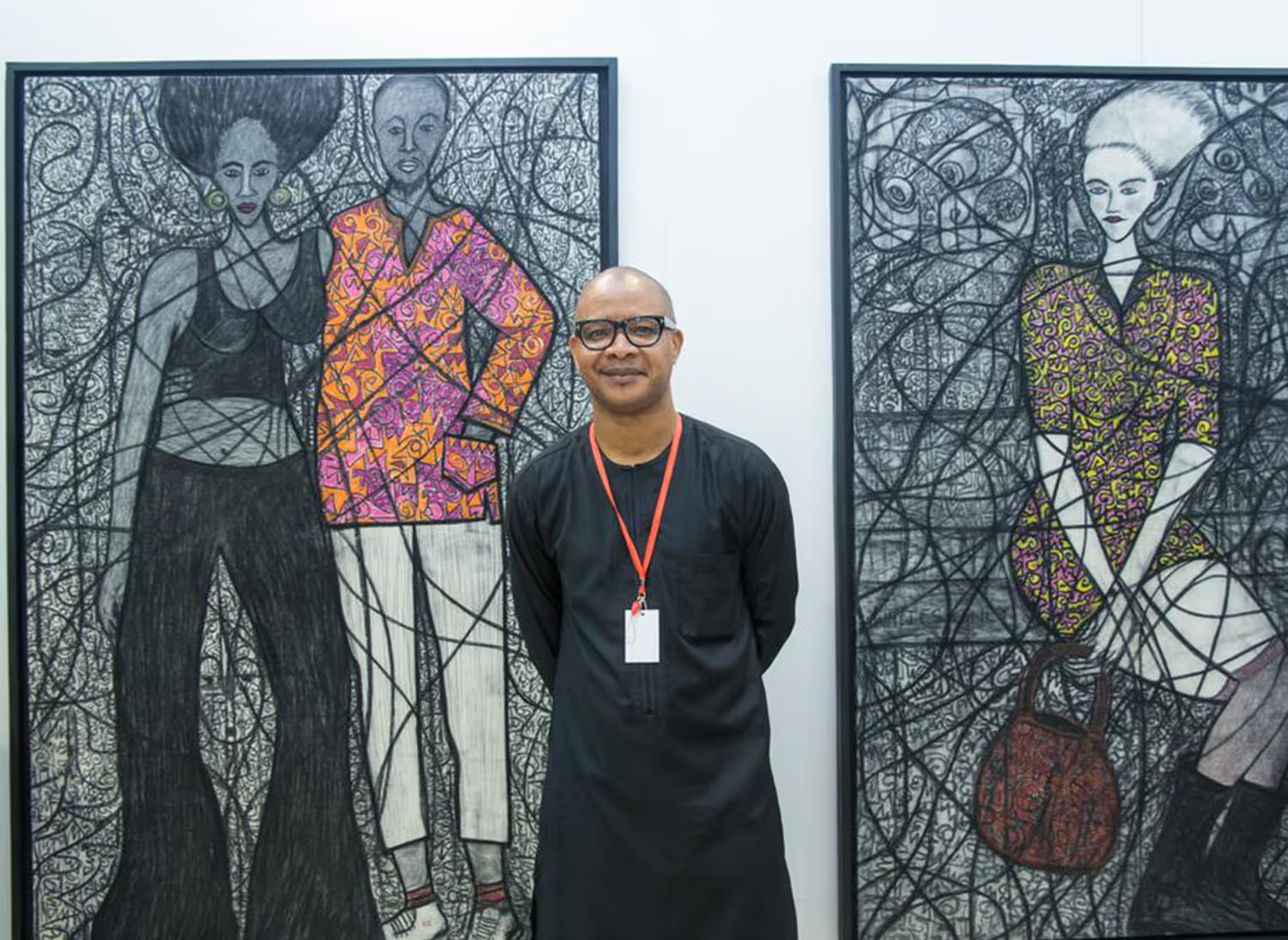
I believe my first one was in 2018 at the Civic Centre. I walked around completely gobsmacked and amazed by what I was seeing and the people I was encountering. People that I had admired from afar were just there walking around. We’d had Alimi Adewale in our collection but had never met him. I was able to run up to him and fan girl. We had Cyrus Kabiru in our collection and we ended up going out for dinner with him the next night. I had never encountered the work of Aboudia before the fair and we subsequently added him to our collection. It felt like a space where you could meet, learn, create, and contribute.
TPS:
That is what continues to move me the most - the connections people have made through ART X Lagos - the friendships, relationships, and exchanges. Victor Ehikhamenor for example has spoken about his first showing at ART X Lagos and how that inspired him and the studio he later built. It’s a place where we gather, dialogue, commune, exchange, build, and we recommit. It truly is a home for us, by us.
LO:
ART X Lagos, as this nexus, has created a satellite of ancillary events that happen before and after the fair. In effect, you’ve created a cultural season in Lagos. I tell people all the time, If you want to experience Lagos at its best, go in late October and stay till early November.
TPS:
It was very deliberate. I chose that moment because I believed in what it could achieve for Lagos. Fun fact: in the first year of the fair, when discussing with the late Bisi Silva, who was on board as our artistic director, she believed that the fair should be in April to buy us more time. But I deliberately chose the week after Lagos Fashion Week and Lagos Photo, which had been going for a few years by then. The message was that visitors could travel from far afield and spend the week in Lagos. What ART X Lagos then did was encourage the emergence of several exhibitions, festivals, events, and openings, allowing our city to present to itself - and to the rest of the world - all of its potential. We’ve grown from maybe half a dozen events in the first year to over 50 events surrounding ART X Lagos today. We have now begun referring to it as Lagos Art Week. What this is yielding for artists, creators, entrepreneurs, and businesses fills me with great pride. It was not an accidental happening; it was my dream from day one.
LO:
What were the initial challenges of building a fair of this scale?
TPS:
One challenge was attaining credibility on the global stage. At the time, international galleries and institutions were uncertain whether Lagos could sustain a fair of this calibre. Convincing them to participate required persistence, diplomacy, and a demonstration of both vision and rigour. We had to show that ART X Lagos was not only viable, but that it would become an essential destination on the global art calendar. Another challenge was infrastructure. At the beginning, Lagos simply didn’t have the systems and logistics to support a fair like ART X Lagos.
LO:
Nothing in Lagos is ever seamless that’s for sure.
TPS:
True, but as the saying goes, necessity is the mother of invention. Working in environments where systems are imperfect forces ingenuity. Our team, for instance, collaborated closely with Lagos State authorities to redesign how major traffic routes such as Ozumba Mbadiwe and Ahmadu Bello Way were managed during the fair. Now, a number of events and major productions have leveraged off of those adjustments. The challenges compelled us to innovate and create solutions that have benefited not just us, but the entire creative ecosystem - and that is just one example.
LO:
I would imagine running a fair like this has come at a great personal cost.
TPS:
It’s intense. In those early years, it demanded everything from me and from our team. I think back to 2019 when we moved from Civic Centre to Federal Palace and we were so captivated by this vision of a bigger, bolder, and greater experience. It was exciting but also physically and emotionally exhausting. I accept that such sacrifices are often necessary with works of lasting significance. I have to thank my team at ART X Lagos, and the many people who’ve worked with us over the decade, for how committed they’ve been to the vision and the significance of what we’re creating. Ultimately, ART X Lagos is now a fixture on the global art calendar, and as its key protagonists, we must continually step beyond ourselves to honour that commitment to our society and our culture.
LO:
You know, entrepreneurship forces you to stretch and grow in a myriad of ways and it tests the most resilient of people. What has launching this fair and growing it into a global force taught you about yourself?
TPS:
I would say to hone my intuition and trust it. I’m speaking of intuition not intellect, of the deep convictions that resonate in your gut. Over time, I have learned that the quiet observations, the theories you develop, the deep feelings that you have, can be a wonderful compass. Listening to that inner voice has guided me and has affirmed the path we have taken. That voice has further been amplified and strengthened over the years by the counsel of trusted advisors such as N’Goné Fall, Femi Lijadu, Papa Omotayo and my family, to name a few.
LO:
That’s very true.
LO:
What’s a piece of art that has moved you recently?
TPS:
This year, we’re diving deep into the archive of J.D ‘Okhai Ojeikere, an artist many know for his hairstyle series. However, his archive spans thousands of images featuring profoundly dignified Nigerians from the 50s, 60s, and 70s, everyday people, students in universities, couples getting married, children, performers at festivals, architecture, reflections on nature, modernity and more. I have been so inspired by this body of work that has gradually been revealed to me by our curator-at-large, Missla Libsekal and J.D’s son, Amaize Ojeikere. When looking at J.D’s work, we are transported to a time that many of us have become disconnected from. We are working with his family to make this archive accessible. It is extraordinary and there is just so much we can all learn from it.
LO:
Let’s speak about the theme of this year's fair, “Imagining Otherwise, No Matter the Tide”. How did your team land on this theme and what does it mean to you?
TPS:
This year’s theme requires us to examine how we live together in cities like Lagos and its comparables around the world. We all know the challenges our societies face, and so we will be exploring how artists and creators can create spaces, experiences, and conversations for us that can help to engender a sense of fraternity and community. How did we develop this theme? Each year, Missla Libsekal and I spend time discussing and sharing the happenings in our society. What are the pressing conversations? What are people feeling? What is the spirit, the mood of the time and what do we want to contribute to it? Through her research and our contemplation, we have profound and robust conversations that ultimately lead to our direction. Missla is an incredible thinker, writer, researcher and honestly, it is wonderful to work with her and other members of our team.
.avif)
LO:
How do you hope artists and audiences engage with the concept of imagining otherwise?
TPS:
First, I hope they pause and allow themselves to be moved by what the artists present. I know it will raise questions, spark conversations, and I hope it inspires action. If visitors leave with a renewed sense of possibility, then we will have succeeded.
LO:
You’ve obviously had tremendous success and ART X Lagos has not only become one of the most influential fairs in Africa, it’s also been instrumental in making Lagos a significant art world destination. What are your hopes for the future of ART X Lagos?
TPS:
Lately I’ve been thinking of legacy: 50 or 100 years from now, what will this moment have contributed to the canon of art from Africa or people of African descent? My hope for ART X Lagos is that as the organisation evolves, we can remain significant contributors to the advancement of the African narrative.
LO:
What do you think awaits the African arts scene in the next decade?
TPS:
I believe the next generation is unstoppable. If they remain rooted and connected to their heritage as well as the works of artists, masters, and teachers that have come before them - and if institutions like ours can help bridge that divide - they will reach unimaginable heights.